Gentle Breeze Technology: Why 18dB Matters
Background noise disrupts sleep more than most people realise. Here is how Gentle Breeze reaches 18dB and when that genuinely matters.
Published on 22 April 20262 min read
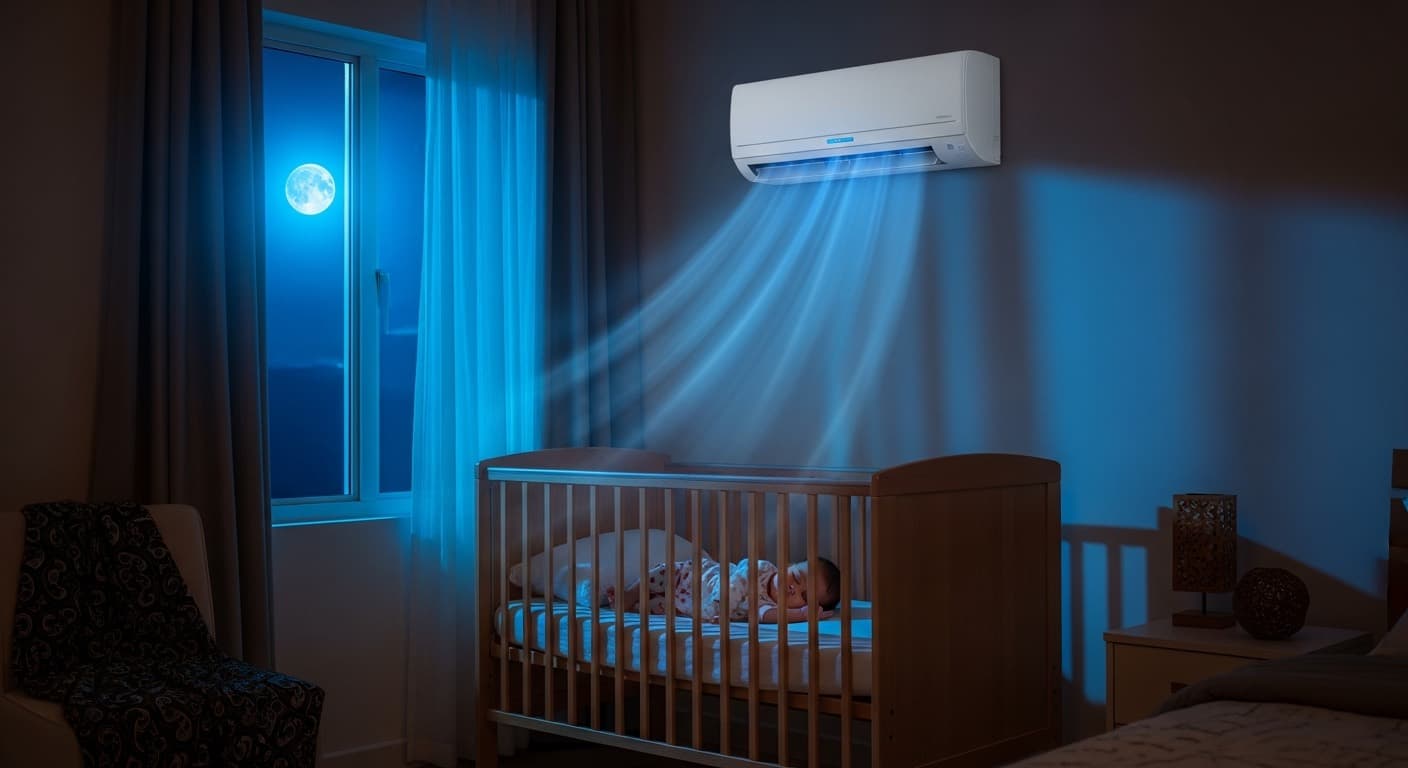
What 18dB actually means
Decibel figures are hard to picture without a reference. For context, here are a few everyday sound levels.
- A quiet bedroom at night — around 30dB
- A whisper at one metre — around 20dB
- Gentle Breeze at its lowest speed — 18dB
- A conventional wall air conditioner — 40dB and up
At 18dB, the unit is genuinely quieter than the bedroom you already consider silent.
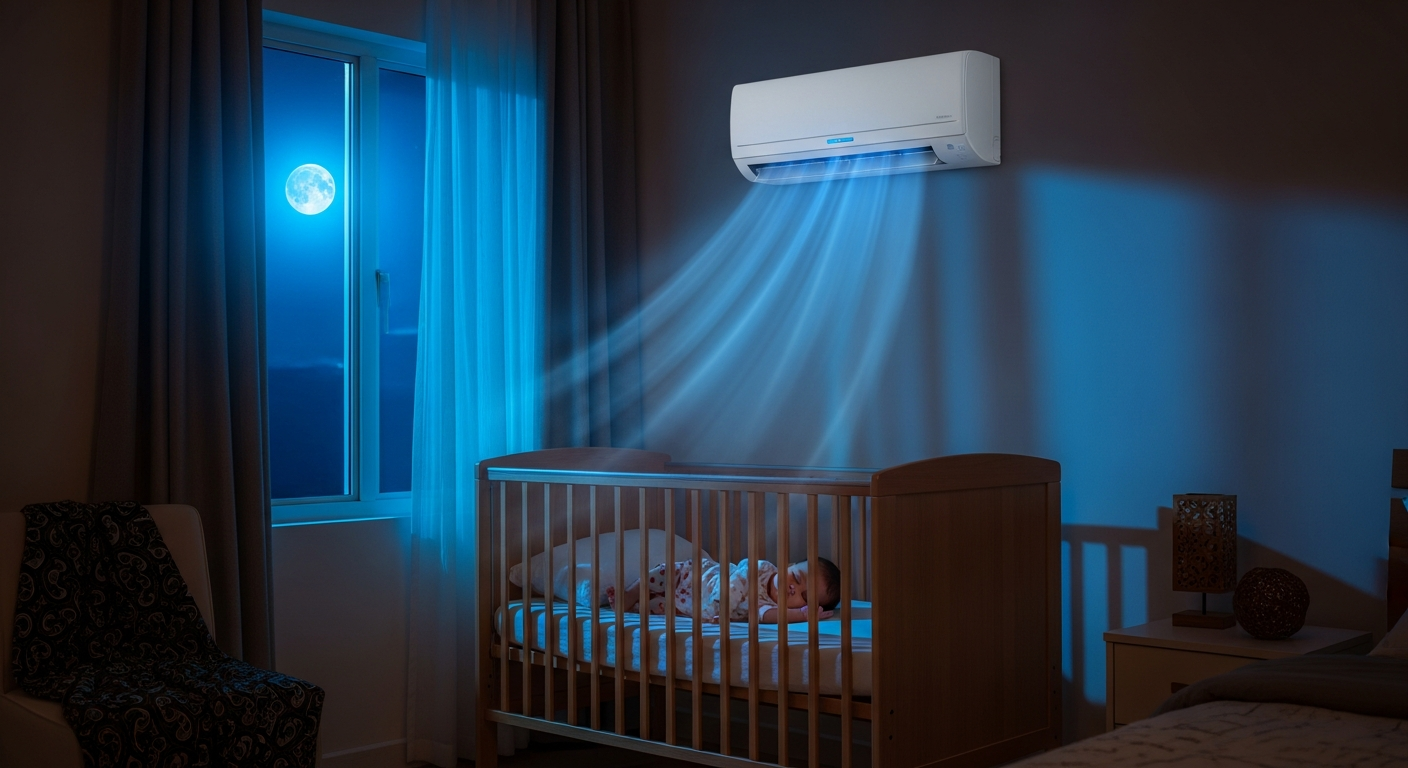
How that noise floor is achieved
Three design decisions work together to drop the noise without giving up cooling power.
- An inverter compressor that holds a low continuous speed instead of cycling on and off
- Larger fan blades that move the same air volume at lower revolutions
- Sound-absorbing insulation around the compressor housing
The real key is the inverter compressor. A non-inverter unit is loudest at the moment it kicks back in, and that happens repeatedly through the night.
When quietness genuinely matters
For most everyday spaces, the gap between 30dB and 18dB goes unnoticed. It becomes obvious in specific conditions.
Light sleepers usually wake not from loud noise but from the change in noise level when a conventional compressor cycles back on. Continuous operation removes that disturbance entirely.
In home offices and meeting rooms, a low noise floor also makes video calls noticeably clearer for the person on the other end.
Is it worth it over Smart Air
Gentle Breeze starts at RM2,799 against RM1,699 for the Smart Air 2.0HP. That premium buys quietness and 24,000 BTU of coverage, not extra electricity savings.
If your room is under 500 sq ft and noise is not an issue, Smart Air is the better value. The full comparison is in our comparison article.
Conclusion
Choose Gentle Breeze when noise is the deciding factor or the space exceeds 500 sq ft. See the specifications in our catalogue, or check coverage in Putrajaya and Bangi.